Quotes retrieved from http://www.dunedin.elim.org.nz/uploads/1/2/7/8/12786940/miracles-c_s_lewis.pdf
Wednesday, January 29, 2014
Supernatural acts of God
Quotes retrieved from http://www.dunedin.elim.org.nz/uploads/1/2/7/8/12786940/miracles-c_s_lewis.pdf
Saturday, January 4, 2014
Supernatural vs Process
This article is very thought provoking - it deals with the idea that Christians typically prefer supernatural descriptions of God's activity rather than natural / process descriptions. This is particularly obvious when it comes to creation and the origin of Scripture.
OBVIOUSLY this is a simplistic (and in some places and for many people, wrong) discussion. Supernatural creation is preferred over evolution for many reasons, and not only because it has more God-interventions that are not considered 'natural'. Biblical inspiration is preferred over a naturalistic explanation for many reasons, not only because it requires more supernatural intervention.
But I think the author makes an interesting point - why is it that we rely on non-'natural' interventions to assure us that God was present and involved and sovereign over a process? While I disagree with the author's specific conclusions regarding creation and Biblical inerrancy, his conclusion that this is not necessary or healthy - it's mostly right. The problem, I think, stems from his emphasis. He minimises the evidence and need for 'non-natural' intervention to support God's sovereign involvement, rather than lifting our view of 'natural processes' to BE a form of 'super-natural' sovereign involvement.
For example, in writing Scripture, he states that wise men simply wrote what they liked, hence no need for a high view of inerrancy, but God was still present in the process. I would say that God is ALWAYS present and active in every person's thoughts and writings, and not a single word is spoken or written that God did not specifically ordain. This includes Scripture. So we can still acknowledge 'natural' processes, and even potentially accept 'errors', but have confidence in the absolute intimate and sovereign direction of God.
This means that we really can trust Scripture to be without error in all that God intended it to teach, and in the clarity of its message, and in its preservation. This is ultimately why I disagree with his specific conclusions about Scripture, and creation.
So 'natural' processes are in fact multitudes of 'supernatural', intimately God-sustained and directed, sovereignty beautiful interventions. We should not minimise processes, or rely on obvious 'supernatural' interventions to assure us of God's involvement. He is ever-present and involved!
Wednesday, January 18, 2012
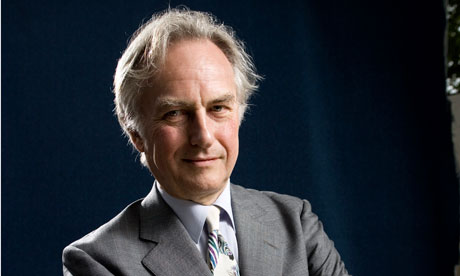
Richard Dawkins celebrates a victory over creationists

Richard Dawkins hopes faith schools will be prevented from teaching creationism as fact. Photograph: Murdo MacLeod
Monday, July 25, 2011
Resolving Faint Sun Paradoxes
Hi guys,
This is an article from Hugh Ross at Reasons to Believe. Like many of their articles, it demonstrates two key things:
- The fallibility of our human interpretation of God's work, including creation.
- The incredible design inherent in the universe - enhanced (rather than diminished) by a thorough understanding of the creation events
Reasons to Believe is an evangelical Christian apologetics organization. They hold to a progressive creationist perspective of the Genesis account of creation (check out their website for details). Many of you will completely disagree with their perspective! I encourage you to ensure you fully understand it before criticizing it. But in any case, see the good in their arguments against pure naturalism.
Here's the text. Let me know your thoughts! I'll include a description of 'progressive creationism' in the comments.
P.S. If you get bored, just read the first two and the last few paragraphs ;)
RESOLVING FAINT SUN PARADOXES, PART 3
7/25/2011
In part 1 of this series, I defined the faint young Sun paradox and described how, in the 1970s and 1980s, astronomers and physicists concluded that volcanic gas emissions pumped enough extra carbon dioxide into the early Earth’s atmosphere to sufficiently enhance the atmosphere’s greenhouse effect so as to compensate for the lower solar luminosity. In part 2, I explained how research teams discovered complications that made the faint Sun paradox seem unresolvable.
Here, in part 3, I will describe how recent observations of young solar analog stars enabled astronomers to pull together everything they know about the history of the Sun, Earth, Moon, and terrestrial life to provide a real, comprehensive resolution to the paradox. This research has also yielded some of the most spectacular evidences for the supernatural, super-intelligent design of the solar system.
Not So Dim After All
Throughout the 1990s and early part of the twenty-first century, it became increasingly evident to scientists there was no way to adjust physical and chemical conditions on early Earth to compensate fully for a Sun 25–30 percent less luminous at the time of life’s origin 3.8 billion years ago. Moreover, planetary scientists were experiencing the same frustrations in their attempts to explain growing evidence that the Martian surface was, for a brief time, warm enough to permit the existence of liquid water.1
These frustrations led certain teams of astronomers to question the Sagan-Mullen model for the history of the Sun (see part 1). In 2003, Caltech astronomers Juliana Sackmann and Arnold Boothroyd pointed out that helioseismology measurements establish that, during its youth, the Sun must have lost at least 4–7 percent of its mass.2 Since the luminosity of a star rises with the fourth power of its mass, Sackmann and Boothroyd determined that the Sun’s brightness 3.8 billion years ago was 15 percent, not 30 percent, dimmer than it is today (see figure 1).
Including early mass loss in the Sun’s history goes a long way toward resolving the faint Sun paradox. With the Sun no more than 15 percent dimmer, Earth would not require nearly so great a quantity of greenhouse gases to keep the planet surface warm enough to sustain life, Thus, as Sackmann and Boothroyd note, the quantities of greenhouse gases needed are within reasonable possibility.
In support of their not-so-faint Sun model, Sackmann and Boothroyd made reference to several observational studies establishing that very young stars equivalent to the Sun’s mass are indeed losing mass at rates consistent with their model. They called for more extensive and definitive observational programs to determine the mass loss history of solar-type stars.
In the April 20, 2011 edition of Astrophysical Journal Letters three astronomers reported on the latest observations of young solar analogs.3 These stars consistently exhibit strong activity phenomena. These phenomena produce a huge variability in X-ray and ultraviolet emission, accompanied by inevitable mass loss. The three astronomers estimated that the loss of mass in the young solar analogs reaches up to 30 percent. Thus, they conclude that the Sun during its youth lost at least 20 percent of its mass. This much mass loss implies that, shortly after it formed fully, the Sun was about 85 percent brighter than it is today (see figure 2).
The research team then took note of the few remaining discrepancies between the standard solar model (SSM) and their observations. Specifically, sound speed determinations from helioseismology do not agree with predictions from the SSM. Likewise, there is disagreement between the observed and the predicted lithium abundance of the Sun. The three astronomers, along with other research teams,4demonstrated that pushing the mass loss of the early Sun up from 4–7 percent to about 20 percent does much to eliminate not only these two discrepancies but a few more minor ones as well.
A Sun that loses 20–25 percent of its mass during its youth seems to solve all the outstanding issues concerning the faint Sun paradox. Evidently, the faint young Sun label needs to be replaced with a more accurate term like the “dimming young Sun.” This new model has another advantage. It explains why Mars would have been warm enough to experience a brief wet episode at some point during its first few hundred million years.5
To be clear, I am not saying the new model by itself solves all the faint Sun paradox problems. Rather, each suggested solution proposed over the past 40 years probably plays a contributing role. That is, it takes a combination of the Sun losing at least 20 percent of its mass during its first billion years, extra greenhouse gases in the atmosphere, an altered albedo for Earth, a carefully controlled and timed introduction of specific life-forms, and perhaps extra atmospheric nitrogen to explain why life could be sustained so ubiquitously and so diversely throughout the past 3.8 billion years.
The next step in building a better dimming young Sun model is to make measurements on a much larger sample of young solar analog stars. Astronomers need to make these measurements all across the electromagnetic spectrum, from gamma-ray wavelengths to long radio wavelengths. Furthermore, they need to make measurements over a few years so as to determine the short-term variability of these stars. Such observations will enable astronomers to determine precisely how much the Sun actually dimmed during its youth, over what time scale it dimmed, and whether or not the degree of dimming varies over the wavelength of solar emission.
One such observational program is already underway. A team of radio astronomers is using the Expanded Very Large Array, or EVLA, (see figure 3) to measure the interaction of stellar winds emanating from young, nearby solar analogs with the interstellar medium. With such measurements, astronomers will be able to calculate the rates of mass loss from these stars.6
The new model does place a new constraint on origin-of-life models. A much-brighter young Sun is a Sun with more dramatic flaring activity, greater variability, and greater X-ray and ultraviolet radiation emission. These features, combined with a rapidly falling solar luminosity, effectively rule out any possibility for life existing on Earth previous to the late heavy bombardment (see here and here). The date for the late heavy bombardment’s end, 3.8 billion years ago, is the same for the first evidence of Earth life; that means the origin of life took place within a geological instant of time. No time for life’s origin implies there’s no possibility for a naturalistic explanation.
As King David declared 3,000 years ago, “The earth is the Lord’s, and everything in it.”7 The new dimming young Sun model proves David’s declaration in a broader context. Sustaining abundant, diverse life throughout the past 3.8 billion years requires multifaceted fine-tuning. As the Sun’s luminosity dims or brightens, certain features on Earth must be fine-tuned correspondingly.
- The amount of carbon dioxide in Earth’s atmosphere
- The amount of methane in Earth’s atmosphere
- The amount of nitrogen in Earth’s atmosphere
- Earth’s albedo
- The quantity and diversity of Earth’s life to contribute or remove just-right amounts of greenhouse gases, erosion, and albedo
No set of natural processes can possibly keep all these factors perfectly and continuously balanced for billions of years. It takes a Mind of great intellect and knowledge who knows the solar system’s present and future conditions and who has the power and the love to provide Earth’s life with everything it needs to thrive.
